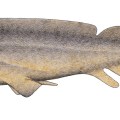
Xenacanthus, meaning “strange spine”, was a 3 foot long shark-like freshwater fish which lived in North America, South America, Europe, and Asia from the second half of the Carboniferous Period to the end of the Permian Period, approximately 323-251 million… Read More ›
Paleozoic
Orthacanthus
Orthacanthus, meaning “straight spine”, was a 10 foot long freshwater shark-like fish which lived during the late Carboniferous Period and early Permian Period roughly 315-275 million years ago. The genus Orthacanthus is divided into twelve different species, two of which… Read More ›
Synechodus
Synechodus was a genus of prehistoric saltwater shark which lived from the early Permian Period until the late Eocene Epoch of the Paleogene Period, 290 to 37 million years ago (Ivanov 2005, pages 127-138). Fossils of this animal reached around… Read More ›
Lissodus
Lissodus was a prehistoric shark which lived from the early Triassic to the middle Cretaceous Period, about 250 to 110 million years ago, give or take. Named in 1835, it was a member of a group of sharks called the… Read More ›
Polyacrodus
Polyacrodus was a genus of prehistoric shark, composed of several species, with fossils found in North America, South America, Europe, Asia, and Africa. The name Polyacrodus means “tooth with many bumps”, and it was officially named by the German paleontologist… Read More ›
Neckless Wonders: Feeding Techniques of Dimetrodon and other Early Terrestrial Tetrapods
There’s been a lot of talk recently on David Peters’ blog “The Pterosaur Heresies” (http://pterosaurheresies.wordpress.com/) on early synapsids – vertebrate tetrapods with one hole in the skull behind the eye. I find this interesting since, as you can tell from… Read More ›