
WARNING: This article contains graphic and disturbing descriptions of the murder of five innocent people.
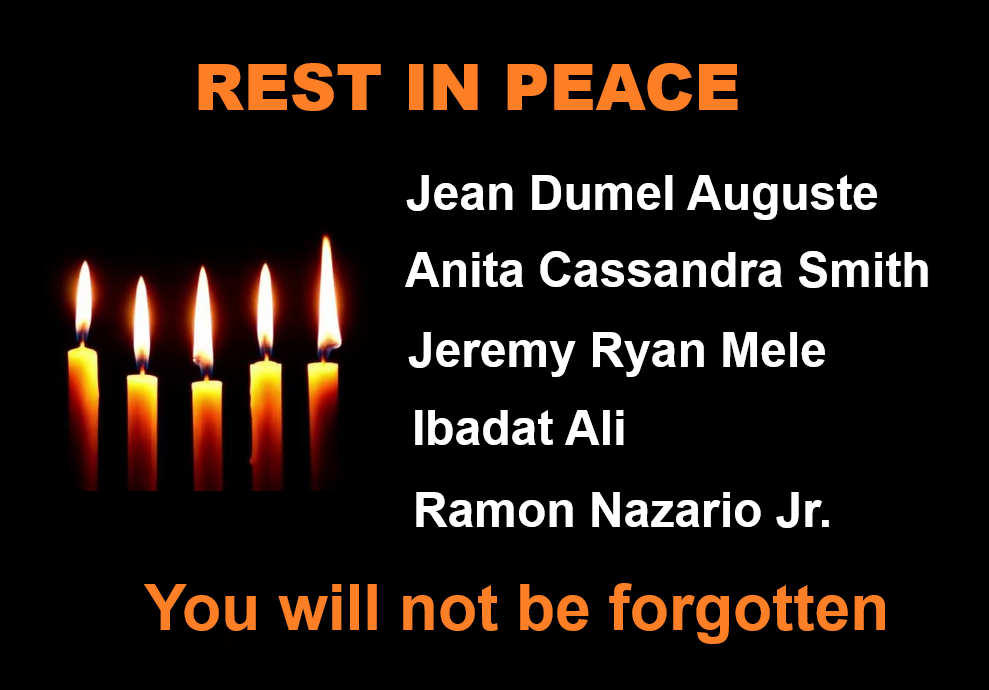
Introduction
Late May 2000…
I had turned 14 just three weeks earlier, and I was getting ready to graduate from elementary school. My thoughts during that time largely centered on the fact that I would be leaving Mary’s Nativity School, the place that had effectively been my second home for the past nine years of my life and beginning a new chapter – high school – and all of the uncertainties that it would bring with it. I and my classmates were fully aware that we would be going on our separate paths in life and we would likely not see each other again, so we all tried to live out the final weeks of 8th Grade in one last hurrah.
And then, it happened.
I have lived in Flushing, Queens my whole life. I know its streets and parks very well. I frequently went to the busy bustling downtown part of Main Street to go to the post office, or to pick up groceries at Green Farms, or to visit the huge public library on the intersection of Main Street and Kissena Boulevard, or have a soda and play a game of darts at McGriskin’s Pub.
Near the intersection of Roosevelt Avenue and Main Street, on the western side of Main Street, were a series of fast food restaurants. These were set up close to the subway entrance to get onto the 7 Train, and hungry commuters would stop at McDonald’s, Burger King, or Wendy’s when they were either on their way to work or coming home from work. Business was booming.
The Wendy’s, in particular, was located at 40-12 Main Street, just down the block from McDonald’s, and around the corner from the 7 Train subway entrance. It was a small unassuming one-story building crowded in by towering multi-story high-rises that loomed upwards on either side of it. Here, in this place that I passed by regularly, something truly horrible happened.
I remember this incident very vaguely from my youth. The horrors of 9/11 and the wars in Afghanistan and Iraq quickly overshadowed this heinous act in my memory. In truth, I had completely forgotten about it for ages until it was brought up in conversation a few years ago, and that stirred some buried memories. I decided to look into it more, and to tell you the truth, I’m sorry I did because I haven’t forgotten about it for a single day since then.
A lot has been written about what has been dubbed by the mainstream news media as “the Wendy’s Massacre”. Many of the reports which came out were confused and contradictory, and trying to sort it all out was a daunting task. However, I decided to collate through all of the accounts and reports of the lead-up to this event, the event itself, and its aftermath because I felt a deep conviction within me that it was necessary. This happened in my home town, just down the road from where I lived, at a place that I passed by every week. These people, these victims, were my neighbors, and the fact that I had completely forgotten about this unspeakable crime for so long haunts me and troubles me immensely. These people cannot and must not be relegated to the ash-heap of history. Their names, and their stories, must be remembered if for no other reason than their fates demand it of us.
Background
The perpetrators of this horrific crime were John B. Taylor (age 36) and Craig Godineaux (age 30). John B. Taylor was 5’5”, stocky, and round-faced while Craig Godineaux stood 6’5” and was thinly built.


Police mugshots of John B. Taylor (left) and Craig Godineaux (right).
John B. Taylor had formerly worked at that exact Wendy’s location in October 1999 as an assistant manager, and was fired shortly afterwards. His co-workers strongly suspected him of taking some of the store’s money, but he was never charged with theft. In fact, Taylor had committed at least two other robberies prior to this date. He was arrested in 1996 for an armed robbery of a McDonald’s in Manhattan (mistakenly recorded in one source as a Chinese restaurant) in which he threatened to shoot the workers; for this, he was sentenced to five years’ probation. He was arrested again in June 1999 for robbing another McDonald’s in Sunnyside, Queens, where he had formerly worked. Because this was a parole violation, there was a warrant out for his arrest.
Like Taylor, his accomplice Craig Godineaux also had a lengthy rap-sheet for robbery, drugs, and illegal ownership of weapons. When he was 18, Craig Godineaux became a drug dealer, selling crack on the corner of 135th Street and Rockaway Boulevard. Godineaux had been convicted twice for selling drugs and once for robbery. Between 1990-2000, he served three terms in New York state prison: 10 months, 2 years, and 3 years.
By late May 2000, both John B. Taylor and Craig Godineaux were working at S.C.R., a men’s clothing store at 89-74 165th Street in Jamaica for the past month. Godineaux worked as a security guard there. Taylor was getting worried about a lack of money, and decided that he knew just the right way to get some.
The Crime
On May 24, 2000, John Taylor and Craig Godineaux took the E Train from Jamaica to Jackson Heights, and afterwards transferred to the 7 Train which stops in downtown Flushing. The Wendy’s was on the same block as the Flushing subway station. At approximately 11:00 PM, the two men entered the Wendy’s restaurant. There were seven employees inside the restaurant at that time:
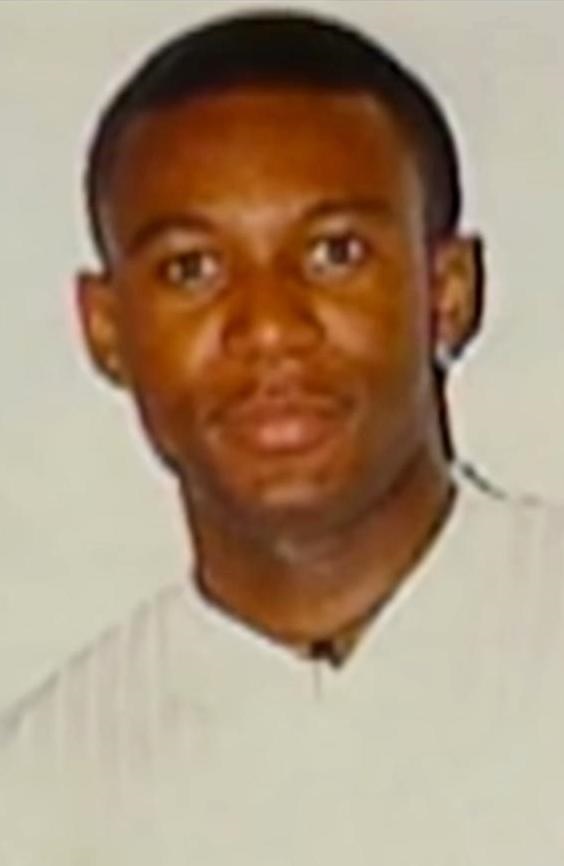
Jean Dumel Auguste, age 27, the restaurant manager. An immigrant from Haiti living in Brooklyn. He was also engaged, and was due to be married next year.
Ibadat Ali, 53, an immigrant from Pakistan who had come to the United States three years before and was living in a basement apartment in Ridgewood with a roommate. He worked seven days a week and regularly sent money back to the rest of his family in rural Pakistan. He also had a master’s degree and was the father of two teenage boys.
Patrick Castro, 22, an immigrant from Ecuador who lived in Jamaica, NY. He had been hired to work as a cook at the Flushing Wendy’s just two weeks earlier.
JaQuione Johnson, 18, a cook from Jamaica, NY. He was the youngest employee in the restaurant that evening.
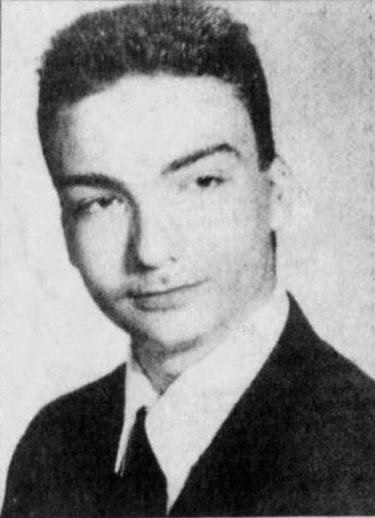
Jeremy Ryan Mele, 18, who had moved to Flushing from Neptune, New Jersey so he could be closer to his girlfriend. In high school he had been involved in his local church and had been a member of the Navy Junior ROTC. He had been working at Wendy’s for seven months, and he wanted to join the military.

Ramon Nazario Jr., 44, born in Puerto Rico and living in Flushing. Married and father to a daughter and son. His sister Maritza worked at that same Wendy’s but she was off-duty that evening, and his older brother Benjamin worked at the hotel around the corner.
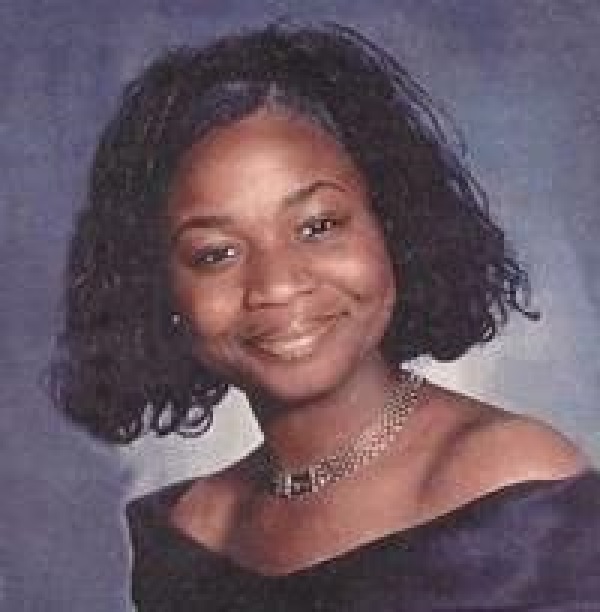
Anita Cassandra Smith, 22, a cashier from South Jamaica. She was planning to attend York College in the Fall and wanted to be either a teacher or social worker helping autistic children. She also volunteered at the Fresh Meadows office of Quality Services for the Autism Community (QSAC) three afternoons a week. Like Jean Auguste, she had also recently become engaged.
Anita Smith was supposed to have left at exactly 11:00 PM when her shift ended, but she decided to stick around for a little while longer. As the two men entered the restaurant, Anita, always friendly, smiled at them. In fact, she recognized one of them – John B. Taylor. When Taylor had worked at Wendy’s as an assistant manager the previous year, he had been the one who had hired Anita.
There were two other customers inside the restaurant at the time John B. Taylor and Craig Godineaux walked in, including an MTA bus driver who was on his dinner break. He observed that Taylor seemed to be eager for him to get out, and later testified that Taylor kept giving him dirty looks the whole time he was there.
After the other two customers walked out, Taylor and Godineaux ordered some food, and then Tayor asked to speak to the restaurant manager, specifically asking for Jean Auguste by name. Jean Auguste and John Taylor had a bit of a history, and Taylor harbored a deep resentment to the man – Auguste had been Taylor’s supervisor at Wendy’s and Taylor blamed Auguste for getting him fired. Even so, on this night, the two men seemed to be friendly with each other. When JaQuione Johnson, the cook on shift that night, saw how chummy John Taylor and Jean Auguste were, he realized that this fellow was the manager’s friend, and decided to go all-out on the food order with extra fixings.
At 11:11 PM, Anita called her fiancé’s cell phone and told him that she didn’t need a ride home because the manager would be driving her back home. At approximately the same time, a uniformed NYC transit cop stopped in front of the front door and wanted to come in, but Anita waved to him indicating that they were closed for the night. The restaurant staff continued to clean the place up. At 11:38 PM, Anita called her fiancé again, but this time he didn’t pick up.
Once the customers left, John B. Taylor approached Jean Auguste and asked if the two of them could talk privately. The two of them then went down into the basement. Here was the manager’s office, the storage area, and the freezer room. Craig Godineaux heard the cook JaQuione Johnson rapping to himself while he was helping to clean the restaurant, and the two of them made some small talk about rap music and their favorite rap artists.
Meanwhile, John B. Taylor and Jean Auguste went into Jean’s basement office, and once inside, Taylor pulled out a .38 caliber semi-automatic pistol and demanded that Jean open the safe and give him all the money inside. The money was in coins, amounting to approximately $2,400.
Taylor then ordered that Jean Auguste get on the intercom and tell all of the employes to come down into the basement. Jean Auguste made an announcement on the intercom for all of the workers to go down to the basement for a meeting. That wasn’t unusual – staff meetings were usually held inside Jean’s basement office. Everyone started leaving their stations and heading for the basement stairs.
It was Ramon Nazario’s duty to lock the doors every night. As he was locking up, his older brother Benjamin, who worked at the hotel around the corner, appeared at the front door. In fact, he often dropped by at Wendy’s to see how his brother was doing. “You going home?” Benjamin asked. “Not yet. They’re having some kind of meeting. I will catch up”, Ramon replied. Benjamin asked if Ramon had money to take the bus, and he said “Yes”. Benjamin recalled that he watched his brother Ramon go down the basement steps.
Then Jean Auguste’s cell phone rang. It was Jeremy Mele’s girlfriend – she was waiting for Jeremy outside. Jean Auguste said that Jeremy was unavailable and told her to go home. It was at this moment that Jeremy Mele probably realized exactly what was about to happen and tried to warn his coworkers of the danger. As he was going down to the basement, he suddenly turned around and tried to push his way back up the stairs saying “No, I want to call the guys! I want to call the guys!” but he was forced back down by Craig Godineaux.
At that moment, John Taylor pointed his pistol at the employees and snapped “Everybody back up and get down on the floor!” Taylor pointed the gun at everyone lying belly-down on the floor while his accomplice Craig Godineaux tied everyone’s wrists together with duct tape and then duct-taped everyone’s mouths shut. Jean Auguste somehow managed to get the tape off of his wrists and he yanked the tape off his mouth, gasping “My asthma, my asthma!” Taylor and Godineaux beat him and put new duct tape over his mouth and wrists.
After this, the two men forced the seven employees to walk into the freezer room. Shortly afterwards, the two of them came back into the freezer room carrying plastic bags. Godineaux put a plastic bag over each employee’s head while Taylor continued to point his gun at them. When JaQuione Johnson saw the plastic bags being put on his coworkers head he believed that Taylor and Godineaux were trying to murder them by suffocating them. The plastic bag which was put on JaQuione Johnson’s head didn’t cover his right eye, and he saw everything that was about to happen. John B. Taylor then commanded “Everybody get down on your knees”.
The manager Jean Auguste was the first one to get shot through the back of the head. Anita Smith, who was kneeling next to him, immediately started screaming, and she was shot soon afterwards. Then Jeremy Mele was killed. After this, Taylor passed the gun to his accomplice Craig Godineaux and told him “Craig, take the gun. Finish them”. JaQuione Johnson, who had been kneeling directly next to Jeremy, assumed that he would be the next, but instead Godineaux pointed his gun at the last person on the line, Ramon Nazario, and shot him through the back of the head, and then shot the remaining three victims in order towards the middle in quick succession. JaQuione Johnson was the last in the group to be shot. The bullet went downward through the top of his head, through the bridge of his nose, blew out through the roof of his mouth and knocked out one of his teeth.
One may ask, why didn’t anybody outside on the street hear the gunshots? Flushing is a very loud and noisy place. If the gunfire had taken place on the first floor, there’s a chance that someone outside might have heard it. But the shooting had taken place downstairs in the basement inside the freezer room. Nobody outside heard it. Nobody could have.
As it turns out, Patrick Castro, the fifth person to be shot, wasn’t dead. The bullet had gone through both of his cheeks, and he played dead to avoid getting shot a second time. The body of Ibadat Ali, who was kneeling to Castro’s left, had fallen across his knees.
At approximately 11:45 PM, John B. Taylor and Craig Godineaux left the restaurant carrying $2,400 of loose change weighing 40 pounds, and took the Q58 bus back home.
Patrick Castro managed to get the plastic bag off of his head, felt blood on his face, and felt a heavy weight across his knees – it was the dead body of Ibadat Ali. He called out “Is everyone OK? Is everyone OK?” but nobody answered. Sometime between 12:30-1:00 AM, Patrick Castro managed to free himself. Then Patrick felt a kick and saw JaQuione Johnson trying to smile at him to let him. Despite his traumatic injury, JaQuione Johnson was still alive, although he couldn’t walk and was lapsing in and out of consciousness
Patrick Castro recalled that he tried to leave the freezer room, but he heard a noise and suspected that the two gunmen were still inside the building and so he went back in. After a little time had passed, he cautiously crept up the stairs. Nobody was inside the building – the two shooters had left. Patrick Castro went up the stairs into the seating area and saw people out on the sidewalk outside the big glass window. He called out to them to call the police, but they didn’t. Then he himself tried to call the police on the phone, but the phone lines upstairs had been cut. Patrick Castro went back downstairs and called 911 using the fax machine inside Jean Auguste’s office, and told the 911 operator that five people had been killed at the Wendy’s restaurant in Flushing on 40-12 Main Street.
Police arrived at the scene at 12:50 AM. Soon, from below in the basement, Castro could hear the police sirens. Castro put Johnson into a chair and asked him “Yo, you think you can make it up the stairs?” Johnson responded “I don’t know”, and fainted again. Castro hauled Johnson onto his back and carried him running up the stairs. Outside, the police were yelling at Castro to open the door, but the door was locked, and Castro didn’t know where the key was, so the police smashed through the glass doors and came inside. Castro pointed the cops to the basement stairs and said “There are five people downstairs”. The police went down while paramedics treated Castro and Johnson. JaQuione Johnson’s injuries were so severe that the paramedics on the scene doubted that he would survive the trip to the hospital. JaQuione Johnson underwent 6 hours of brain surgery and remained in critical condition. Patrick Castro, who was shot through both cheeks, was released from the hospital on Thursday and was put under police protection – the two shooters were still out there somewhere.
Capture
Hal Sherman, a detective for the NYPD, was tasked with investigating the crime scene. He described it as “horrendous” as he saw the five dead bodies slumped over in the freezer, the floor covered with a spreading pool of blood. Police Commissioner Howard Safir stated “This is the most callous, worst crime that I’ve seen in a long time”. Queens District Attorney Richard Brown remarked that it was the worst crime scene that he had ever seen since he took office, and vowed no rest until the killers were caught. The reporter Mary Murphy called it one of the most savage crimes in the entire history of Queens County. The news media quickly dubbed the incident “the Wendy’s Massacre”, and the name has stuck to this day.
Word quickly spread throughout all of Flushing about what happened. It was shocking and appalling. Benjamin Nazario, Ramon Nazario’s older brother, was sleeping when his sister started yelling that something had happened at the Wendy’s where Ramon worked, and the horrible truth was revealed. During the time of my childhood, Flushing wasn’t known for violent crime. Instead, Flushing was notorious for selling black market contraband, prostitution, car-jacking, purse-snatching, and pick-pocketing. A single murder would be shocking. Having five people murdered in cold blood was horrifying. In the aftermath of the shooting, hundreds of people crowded onto the sidewalk outside the Main Street Wendy’s leaving flowers, lit votive candles, and written prayers. Wendy’s management offered a $50,000 reward (a pathetically small amount for a multi-million dollar corporation) and the New York City government offered an additional $10,000 for information leading to the arrest of the perpetrators.
The crime was eerily similar to another multiple-murder of fast-food employees which had taken place in January 1991 in Irving, Texas. At about 5:00 AM, police pulled over a car which was driving erratically. When the cops looked into the car with their flashlights, on the backseat was a Taco Bell takeout bag that was packed full of money. The police immediately suspected that the two teenagers in the car had robbed one of the five or six Taco Bells in the area. A quick survey of nearby Taco Bells revealed that only one of the locations was closed with the lights off and the doors locked – all the rest of them were open for business. Because the front door was locked, the police climbed into the restaurant through the small drive-through window to see if anything was wrong. Inside, the police officer found four dead bodies inside the restaurant’s freezer room, and had been shot in the back of their heads. The two men who were detained by the police were arrested and charged with robbery and four counts of murder. One of them, Jessy Carlos San Miguel, was found guilty of the four murders and was sentenced to death; he was executed in 2000. His accomplice Jerome Green pled guilty to his involvement in the crimes and was sentenced to 50 years in prison, with the option of parole in 2004. His parole was rejected. One cannot help but wonder if John B. Taylor learned of this incident and decided to keep it in the back of his mind because he might need that info later. Then again, it’s probably just a coincidence.
Throughout the early hours of May 25, the NYPD practically ripped the town of Flushing apart looking for the two people responsible for this unspeakable atrocity. A dragnet was instituted over the neighborhood. Bloodhounds were brought in to track the pathway that the killers may have taken, and sewers were opened and searched for any weapons the murderers may have used. Later that morning, John B. Taylor and Craig Godineaux both went to work at the S.C.R. clothing store in Jamaica. That night, Taylor watched a Knicks basketball game on TV with his girlfriend. It was as if nothing had happened.
Then, there was a lucky break. Assistant District Attorney Daniel Saunders recalled “The crime scene investigator noticed that the box of garbage bags was out of place. It had been moved…It was sent to the lab and Taylor’s thumbprint came up. That was a piece of gold”. John B. Taylor hadn’t worked at that particular Wendy’s since October of the previous year. His thumbprint on the garbage bags meant that he had been there very recently. The cops now had a lead. The word went out – find and arrest John B. Taylor.
The following day, John Taylor was staying at his sister-in-law’s house at 11 Dillmont Street in Brentwood, Suffolk County, NY. The police suspected that Taylor might be hiding out at a friend’s or relative’s house, so they put the home under surveillance to see if he might be inside.
Then, a stroke of happenstance occurred. Nearby, a girl had been badly injured in a bicycle accident, and police rushed to the scene. When John B. Taylor momentarily popped outside to see what the commotion was, the stake-out cops who had been watching the house saw him and grabbed him. Amazingly, Taylor was still carrying the .38 cal. pistol on him within a fanny pack when he was detained. The weapon was handed over to police ballistics lab for testing to determine if it was the same gun used in the Wendy’s Massacre. After this, the police searched the house, and they discovered a large amount of cash in a canvas bag as well as the video tape that had been removed from the Wendy’s security camera. It was as open-and-shut as it could get. John B. Taylor was arrested and taken into police custody. When he was questioned by the police, he requested a polygraph test insisting that the results of the test would prove him to be innocent. He also wrote an 11-page statement blaming his accomplice Craig Godineaux for the entire incident. The cops promptly arrested Craig Godineaux, and the two men were booked on charges of armed robbery and multiple counts of first-degree murder.
The Trial
Right from the start, Ramon Nazario’s older brother Benjamin had been calling for John Taylor and Craig Godineaux to be executed for the murder of his brother. The family of Jean Auguste had also been calling for both John Taylor and Craig Godineaux to be executed. Kareem Ali, the brother of Ibadat Ali, demanded justice for his murdered brother in May 2001 stating “If those persons had been in Pakistan, we would have dealt with them ourselves”, implying that the two perpetrators would have been lynched.
In September 2000, Queens District Attorney Richard Brown was considering whether to ask for the death penalty to be issued to John B. Taylor and Craig Godineaux. He had until November 21, 2000 to make that decision. Joan Smith, the mother of Anita Smith sadly commented “Even if they ask for the death sentence, it is not going to bring back my daughter”.
But the outcry from the people of Flushing was loud and clear – they wanted both men dead.
Presiding over the case was Judge Steven Fisher. Opening arguments were presented on Tuesday October 30 within the New York State Supreme Court in Manhattan. Representing John Taylor was a public defender named John Youngblood. Youngblood downplayed the murders as a “robbery gone wrong”, asserting that while Taylor was the brains of the operation, it wasn’t Taylor’s intention to kill the people in the restaurant. He also said that his client freely admitted to killing Jean Auguste, but denied killing Anita Smith. Youngblood also implied that Taylor’s accomplice Craig Godineaux pulled the gun out of Taylor’s hand and shot the remaining victims on his own initiative rather than being told to do so by Taylor. He described Taylor as “a flawed human being” and feared that his “humanity” would be ignored during the trial.
An analysis of Craig Godineaux’s mental state showed that he had a below-average IQ. However, this was exaggerated by the media who referred to him as being slightly retarded or even downright imbecilic; one source even claimed that Godineaux was sucking on his thumb like a toddler as he was shooting the victims in the freezer, even though there is no evidence for this. According to New York State law, a person who is mentally incapacitated cannot be subject to capital punishment, and the worst which would happen would be lifetime imprisonment. Craig Godineaux pled guilty to the murders of Ibadat Ali, Jeremy Mele, and Ramon Nazario and the attempted murders of Patrick Castro and JaQuione Johnson, and on February 21, 2001, Craig Godineaux was sentenced to imprisonment for life without parole.
Assistant District Attorney Daniel Saunders pointed out that putting the plastic bags over their heads was a deliberate and conscious action and demonstrated that John B. Taylor fully intended to murder these people, and that it wasn’t simply a “robbery gone wrong” as the defense alleged. Saunders then stated that the plastic bags were put over their heads to protect Taylor’s clothes from being splattered with the victims’ blood, since he had to take public transportation back home. Because Taylor had formerly worked at that exact Wendy’s location, he knew the layout of the building and knew where everything was located, so he knew where the plastic bags were kept. When Taylor was questioned why he had shot the restaurant employees, he responded that he didn’t want any witnesses to the robbery.
The jury took eleven hours to reach a verdict. On November 19, 2002, John B. Taylor was found guilty of murdering Jean Auguste and Anita Smith. Now came the matter of what to do with him. Sentencing was not given immediately. It would be left up to the jury to decide whether or not Taylor ought to get the death sentence. Seven days later on November 26, John B. Taylor was sentenced to death.
For two years, John B. Taylor waited on death row at the Clinton Correctional Facility in Clinton County, NY for his turn in the execution chamber. Then in 2004, New York abolished the death penalty. In 2007, the New York State Court of Appeals overturned John B. Taylor’s death sentence in a vote of 4 to 3. The reason for it had to do with a claim regarding the judge’s interaction with the jury, and it was felt that the judge was strong-arming the jury into voting for the death penalty – a claim that many people have vehemently denied. Regardless, requests were made to the court that a special exception ought to be made in this case due to the utterly heinous nature of the crime. However, the requests were refused. John B. Taylor’s death sentence was changed to lifetime imprisonment without parole.
The Aftermath
On September 25, 2000, Wendy’s International held a memorial service at the Queens Botanical Garden and planted a memorial cherry tree. Attending the meeting were several hundred people including family members and friends of the victims, as well as Wendy’s president Dave Thomas, Wendy’s vice president Dennis Lynch, Mayor Rudy Guiliani, Queens Borough President Claire Shulman, and Queens District Attorney Richard Brown. Both Dave Thomas and Mayor Guiliani shook hands with some of the relatives of the victims.
Following the shooting, both Wendy’s International and the New York City government announced a fundraiser to help the families of the victims. It was stated that Wendy’s would match dollar-for-dollar whatever was raised. In total, $287,000 was raised (including the Wendy’s contribution), which would be divided amongst the seven families.
Wendy’s vice president Dennis Lynch stated that the right thing to do was to permanently close the Wendy’s on 40-12 Main Street. However, he also said that they were committed to opening a new Wendy’s elsewhere in Flushing. Benjamin Nazario, who attended the service, remarked that he was glad the Wendy’s on Main Street was going to be closed. “My brother was there because he was a hard worker and I hope people will remember him that way”, he said. Joan Smith, the mother of Anita Smith, suggested that the location could be turned into a community center.
For some time, the Wendy’s location was boarded up and abandoned. Then in March 2001, it was announced that the location of the former Wendy’s on 40-12 Main Street would be turned into a shopping mall. The property had been sold in February to Ben Wong, the owner of the Wok & Roll chain of fast-food Chinese restaurants, for $2.2 million. However, it was implicitly understood that no food would be sold at that location. Roger Lo, who was the real estate broker whose job it was to find merchants to sell at the new mini mall, said that a food-business would never occupy this location ever again. Lo also stated that the building’s owner hired a Buddhist monk and a Christian minister to offer prayers inside the store in order to purify the site of ghosts or bad spirits.
Jean Auguste’s father, Jean Auguste Sr., attended the memorial service held at the Queens Botanical Garden in September 2000. He said “I still can’t sleep…I try, but I can’t. I just lay on the bed”. Millie Auguste, the sister of Jean Auguste, stated in May 2001 that she cries every day. “I miss him. I miss my brother very much…We don’t know when we’re going to forget about that”.
Following the shooting, it was difficult to track down Ibadat Ali’s relatives. He had no family in the United States and his roommate who lived with him in Ridgewood wasn’t able to provide much information. People weren’t even sure how old he was. The American newspapers repeatedly listed him as being 40, but his family confirmed that he was actually 53. For a time, his body lay unclaimed in the city morgue. His family lived in the rural village of Talwandi. “Everybody misses him a lot”, Kareem Ali, the brother of Ibadat Ali, said through a translator. “He was a good brother to everybody”.
Jacqueline Hall, the mother of Jeremy Mele, said that her life will never be the same without her son. “Every holiday is ruined”, she lamented. “There is no closure for me”, she said. Because Jeremy was an active member of Neptune High School’s Junior ROTC, she started a scholarship in his honor. She is also angry that John B. Taylor was never executed, saying “I’m sure he doesn’t think a minute about the killings”. She visits her son’s grave every week.
Many years later, the pain for Anita Smith’s family still cuts deep. Her father Michael asserts “I know when my daughter died. She was callin’ ‘Daddy, daddy!’ I know that! In my heart, in my heart”. In 2001, Quality Services for the Autism Community – the organization which Anita Smith volunteered at – created a scholarship in Anita Smith’s memory. Known as the “Anita Smith Memorial Scholarship”, it helps to fund the educational pursuits of college students who wish to have a career in developmental disabilities. If you wish to donate, please send a check payable to QSAC to: Anita Smith Memorial Scholarship Fund, c/o QSAC, 30-10 38th Street, Astoria, NY 11103. Ten years after the death of her daughter, Joan Truman-Smith refused to forgive her daughter’s killer and finds getting through the May of every year to be a difficult ordeal. Of her killer John Taylor, she said “He’s a monster, not a human being…I hope he dies in jail soon”.
For the Nazario family, the death of Ramon was too much for them. On the date of his wake, on May 27, his mother Ramona and his wife Margarita suffered medical episodes. Twenty years after the murder of his younger brother, Benjamin Nazario still hasn’t recovered from it. Occasionally, he passes through Flushing, but he always avoids that specific location where the Wendy’s formerly stood. “When I go there, I go to the other side of the street”. “I miss him a lot and I’m bitter,” he said. “I can’t get over it”. Ramon Nazario’s son, who was only 2 years old at the time of his father’s murder, became a US Marine. Benjamin and Ramon’s mother Ramona died in 2007. Benjamin recalled “Taylor took another victim, my mother, because she got sick from the heart after Ramon’s death and never was the same”.
Patrick Castro returned to Ecuador, but then came back to the United States to go to college. He needed to have therapy with psychologists for a long time afterwards to help him cope with his trauma. He started drinking too much, but was warned about this by his mother, and he stopped. Castro was also fearful of getting married and starting a family because he was terrified that some horrible fate might happen to them too. He got married at age 33 and has children. “Right now, I have a family. I’m happily married, I love my wife. I have my kids, they are my life”. He now owns a jewelry store in Manhattan. Even more than 20 years later, he says that he still avoids the block on Main Street where Wendy’s used to stand. However, he also says that, after all this time, he has forgiven his would-be-murderers saying “I pray for them, but I say ‘Why did they do this to us?’”
Following the shooting, JaQuione Johnson underwent 6 hours of brain surgery. After leaving the hospital, he was sent to an undisclosed rehabilitation center, and from then on was living in a group home. “I guess you could say I’m homeless…My mom has no room for me and I have no place to go”. JaQuione Johnson was partially paralyzed on his right side for several months after the shooting, and he repeatedly suffered seizures. He needed to re-learn how to walk. Within three weeks, he was walking and talking and was discharged from the hospital. From a medical standpoint, he made a miraculous recovery, but from an emotional and psychological standpoint, his mother has said that her son hasn’t recovered at all. JaQuione Johnson said that he numbs his pain by drinking and smoking weed. These people were more than just coworkers, they were his friends. “I still think about my friends all the time, and I gotta live with that for the rest of my life”.
Jean Dumel Auguste’s body was transported to Croix Des Bouquets, Haiti (a suburb of Port-au-Prince) and was buried in his native soil.
It is unknown what happened to Ibadat Ali’s remains. It’s likely that the body was transported back to his home village of Talwandi, Pakistan to be properly mourned and buried.
Jeremy Ryan Mele is buried at Evergreen Cemetery in Farmingdale, Monmouth County, New Jersey (Section 1A). He was buried wearing the Navy Junior ROTC uniform which he loved to wear.

The gravesite of Jeremy Mele. Photograph by Betty Van Brunt Andrews (February 11, 2009).
https://www.findagrave.com/memorial/19972524/jeremy-r-mele.
Ramon Nazario Jr. is buried at Mount Saint Mary Cemetery in Flushing, Queens County, New York (Section 1, Row Y, Grave 44). He was buried wearing his favorite pinstripe suit.
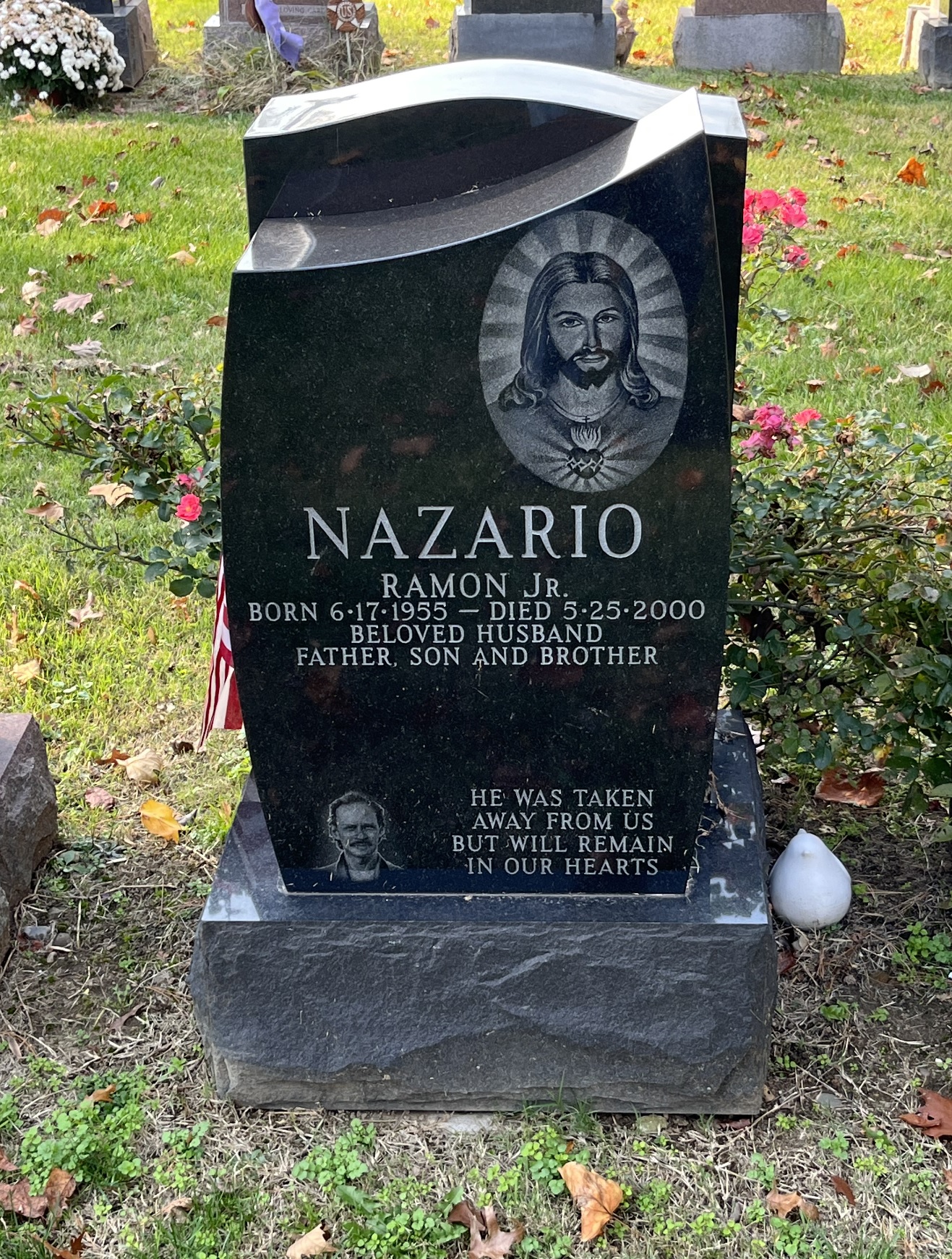
The gravesite of Ramon Nazario Jr. Photograph by Jason R. Abdale (November 6, 2023). I hereby declare that this photograph is a “public domain” image.
Anita Cassandra Smith is buried at Pinelawn Memorial Park and Arboretum in East Farmingdale, Suffolk County, New York (Section 90, Block 3, Range 207, Plot F, Grave 286).
It has been 25 years since you were taken away from us by violence, greed, and ignorance. None of you deserved to have your lives ended on that dark night. Their story is not forgotten. It cannot be.
This article is dedicated to the memory of Jean Dumel Auguste, Ibadat Ali, Jeremy Ryan Mele, Ramon Nazario Jr., and Anita Cassandra Smith, and to all of those who are still suffering from their deaths.
Bibliography
Clark County Prosecutor. “Jessy Carlos San Miguel”.
http://www.clarkprosecutor.org/html/death/US/sanmiguel650.htm.
CNN. “Two suspects in Wendy’s shootings arrested” (May 26, 2000).
https://web.archive.org/web/20071015101958/http://archives.cnn.com/2000/US/05/26/wendys.shooting.03/.
Daily News. “Year of pain for kin in Wendy’s slay: Coping with loss of 5 gunned down”, by Maki Becker (May 31, 2001).
https://www.newspapers.com/article/25650637/daily_news/.
Daily News. “Families plan funerals for slaying victims” (May 29, 2000).
https://www.nydailynews.com/2000/05/29/families-plan-funerals-for-slaying-victims/.
Daily News. “For the family of one victim, grief is just too much to bear” (May 28, 2000).
https://www.nydailynews.com/2000/05/28/for-the-family-of-one-victim-grief-is-just-too-much-to-bear/.
Daily News. “Immigrant Lived & Died in Darkness” (May 30, 2000).
https://www.nydailynews.com/2000/05/30/immigrant-lived-died-in-darkness/.
Daily News. “It began as routine night & ended in chamber of horrors” (May 26, 2000).
https://www.nydailynews.com/2000/05/26/it-began-as-routine-night-ended-in-chamber-of-horrors/.
Find a Grave. “Jeremy Ryan Mele”.
https://www.findagrave.com/memorial/19972524/jeremy-r-mele.
Find a Grave. “Ramon Nazario Jr.”.
https://www.findagrave.com/memorial/176829226/ramon-nazario.
Find a Grave. “Anita Cassandra Smith”.
https://www.findagrave.com/memorial/230961085/anita-cassandra-smith.
New York Post. “A tearful farewell for teen massacre victim” (June 1, 2000).
https://nypost.com/2000/06/01/a-tearful-farewell-for-teen-massacre-victim/.
New York Post. “Families of Wendy’s Massacre Victims Plant Memorial Tree”, by Neil Graves (September 26, 2000).
https://nypost.com/2000/09/26/families-of-wendys-massacre-victims-plant-memorial-tree/.
New York Post. “Ex-worker hunted in massacre”, by Murray Weiss (May 26, 2000).
https://nypost.com/2000/05/26/ex-worker-hunted-in-massacre/.
PIX11. “Exclusive: Survivor of Wendy’s fast food massacre in Flushing breaks silence after 20 years”, by Mary Murphy (February 10, 2020).
https://pix11.com/news/local-news/queens/exclusive-survivor-of-wendys-fast-food-massacre-in-flushing-breaks-silence-after-20-years/.
PIX11. “Wendy’s massacre shooter who killed 5 regrets taking plea deal, tells his version 20 years later”, by Mary Murphy (February 11, 2020).
https://pix11.com/news/local-news/queens/wendys-massacre-shooter-who-killed-5-regrets-taking-plea-deal-tells-his-version-20-years-later/.
PIX11. “Wendy’s shooting massacre haunts survivor, families 20 years later”, by Mary Murphy (May 24, 2000).
https://pix11.com/news/local-news/wendys-shooting-massacre-haunts-survivor-families-20-years-later/.
PIX11. “Queens Wendy’s massacre hero carried co-worker on his shoulder”, by Mary Murphy (February 23, 2023).
https://pix11.com/news/local-news/queens/queens-wendys-massacre-hero-carried-co-worker-on-his-shoulder/.
Queens Chronicle. “Memorial Scholarship For Anita Smith Pleases Family”, by Liz Rhoades (May 31, 2001).
https://www.qchron.com/editions/north/memorial-scholarship-for-anita-smith-pleases-family/article_8ec250e3-f0b3-507d-b4b4-fb460ffbd625.html.
Queens Chronicle. “Family And Friends Remember Victims Of Wendy’s Massacre”, by Liz Rhoades (September 28, 2000).
https://www.qchron.com/editions/north/family-and-friends-remember-victims-of-wendy-s-massacre/article_f98effc9-db8c-5671-a228-12e6fed17cfc.html.
Queens Chronicle. “Future Of Wendy’s Site Will Be Mini-Mall And Dollar Store”, by Liz Rhoades (March 29, 2001).
https://www.qchron.com/editions/north/future-of-wendy-s-site-will-be-mini-mall-and-dollar-store/article_702bcd7a-7b19-533b-9435-08a76317a417.html.
Queens Chronicle. “Wendy’s Case Begins With Taylor’s Admission Of Guilt”, by Liz Rhoades (October 31, 2001).
https://www.qchron.com/editions/queenswide/wendy-s-case-begins-with-taylor-s-admission-of-guilt/article_45c0273c-7e6f-5dea-9967-d70e41791d6e.html.
Queens Chronicle. “Pain never ends for victims’ families lies”, by Liz Rhoades (May 20, 2010).
https://www.qchron.com/editions/north/pain-never-ends-for-victims-families-lies/article_256711be-7515-5559-8551-d2f2c450f047.html.
QNS. “Civil Court dismisses Flushing Wendy’s massacre suit”, by Cynthia Koons (January 8, 2004).
https://qns.com/2004/01/civil-court-dismisses-flushing-wendys-massacre-suit-2/.
The New York Times. “Survivor of Wendy’s Massacre Offers Gruesome Details”, by Sarah Kershaw (November 7, 2002).
https://www.nytimes.com/2002/11/07/nyregion/survivor-of-wendy-s-massacre-offers-gruesome-details.html.
Categories: History, Uncategorized
 DINOSAURS AND BARBARIANS
Leave a comment